

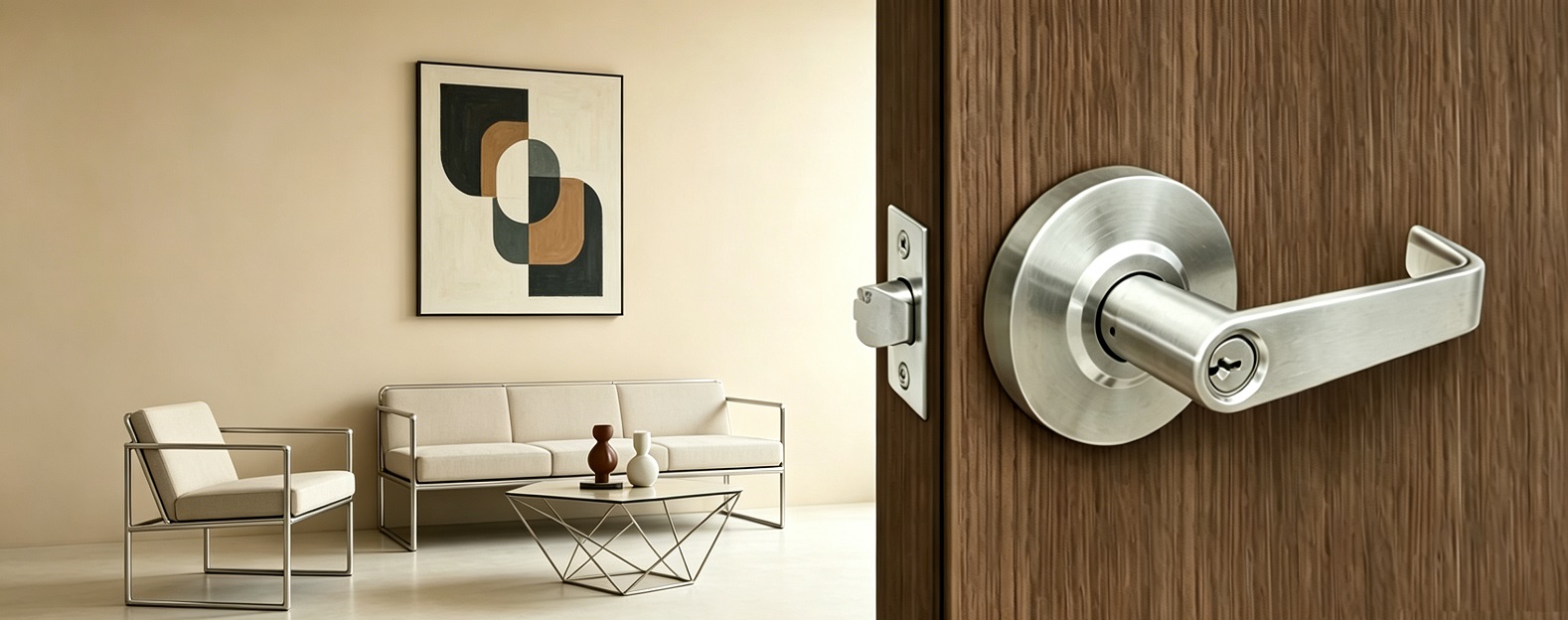
Replacing a door handle is more than a simple repair task. In apartments, offices, hotels, and public buildings, a correct replacement process protects door alignment, preserves latch performance, and reduces future maintenance.
Removing a door handle is a simple job on the surface, but the correct method helps protect the door panel, latch body, spindle, and finish. In residential projects, hotel maintenance, apartment upgrades, and commercial fit-outs, improper removal can leave visible marks or damage reusable parts.
Bathroom door handle removal looks simple, but in project maintenance and replacement work, the correct method matters. A privacy handle often includes a concealed fixing structure, emergency release function, latch mechanism, and moisture-resistant finish. In humid spaces, poor removal methods can scratch plated surfaces, deform the rosette, or damage the spindle and lock body.
Handle placement on a bifold door is different from standard hinged doors because of the folding mechanism, panel interaction, and sliding track system. Correct positioning ensures smooth operation, balanced force distribution, and long-term durability.
Choosing the correct hole saw size is critical for installing a door handle or lockset. Using the wrong size can lead to poor fit, misalignment, or reduced structural stability. Most modern door hardware follows standardized dimensions to simplify installation across different door types.
Door handles are produced from a range of metals and engineered materials, each selected based on strength, durability, corrosion resistance, cost, and application scenario. From a manufacturing perspective, material choice directly determines product lifespan, surface finish quality, and performance under repeated use.
Replacing a door handle with a lock is a common upgrade for improving privacy or security. The process involves removing the old handle, installing a new lockset, and ensuring proper alignment between the handle, latch, and strike plate.
From a manufacturing perspective, modern interior handles are engineered with standardized components—spindle, latch, and mounting plate—to allow efficient maintenance and replacement.
Brass door handles develop tarnish over time due to oxidation, moisture exposure, and environmental contaminants. While cleaning can restore appearance, the method must match the material composition and surface finish to avoid damaging the handle.
The height of a door handle is not arbitrary—it is defined by ergonomic standards, building codes, and installation consistency requirements. Correct positioning ensures comfortable use, accessibility compliance, and uniform appearance across projects.
From a manufacturing perspective, lever handles are designed for secure installation while allowing controlled disassembly for maintenance or replacement.
A privacy door handle is a type of interior door hardware designed to provide basic locking for personal spaces such as bedrooms and bathrooms. Unlike keyed entry locks, it prioritizes convenience and safety, allowing quick locking from the inside and emergency access from the outside.