erick@spiewakgroup.com
0750-3668626
+86-13428282793


Selecting the right door lock system is an important decision for architectural projects because locks directly affect security, durability, installation efficiency, and daily user experience. Among commercial door hardware solutions, mortise locks and cylindrical locks are two widely used systems.
Although both locking systems provide access control and door security, their structures and application advantages are different. A mortise lock is installed inside a pocket cut into the door edge, while a cylindrical lock is installed through drilled holes in the door.
Understanding these differences helps architects, contractors, and project developers choose the right hardware solution for different building requirements.
As a professional Architectural Hardware manufacturer, Wingstec provides complete door hardware solutions including locks, handles, hinges, glass hardware, and customized architectural accessories. Through OEM/ODM capabilities, integrated production, and strict quality control, Wingstec supports global projects requiring reliable and customized Door Hardware solutions.
The biggest difference between mortise locks and cylindrical locks is the installation structure.
A mortise lock contains a lock body installed inside a specially prepared cavity within the door. It usually includes components such as the lock case, latch, deadbolt, cylinder, and handle mechanism.
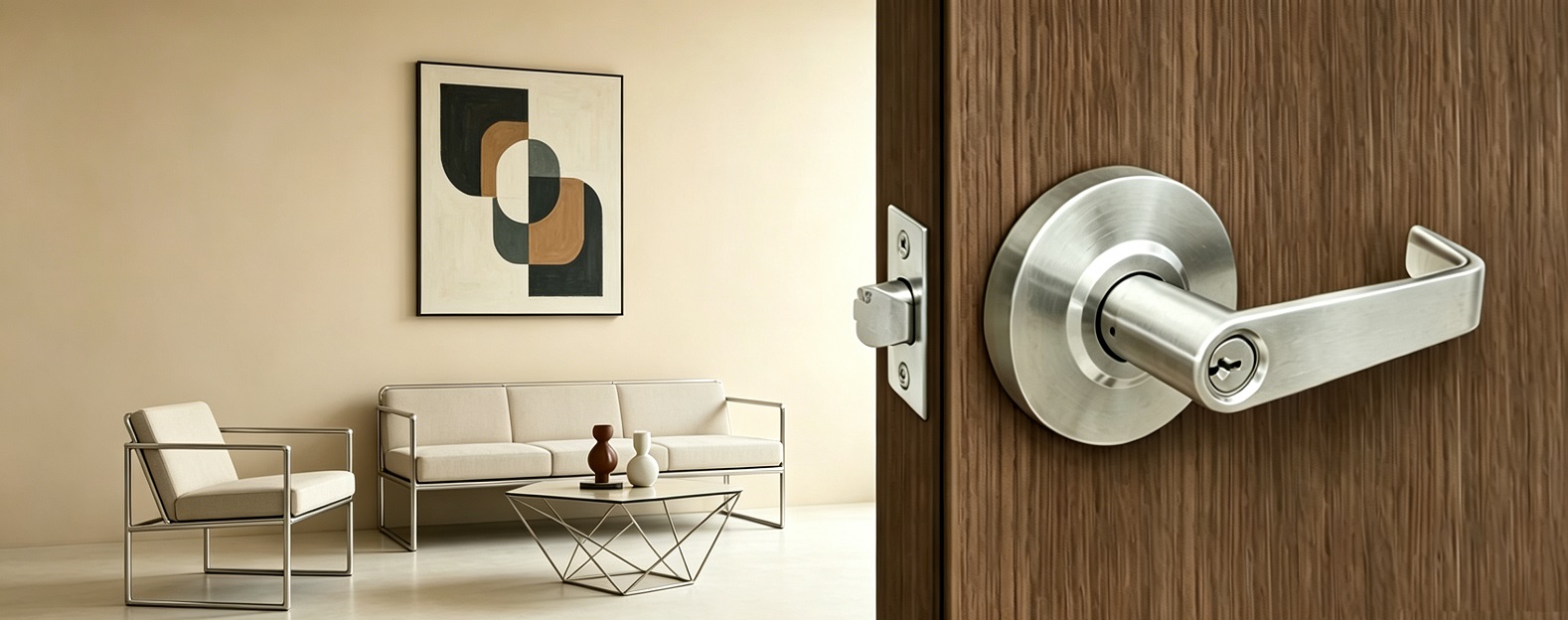
A cylindrical lock uses a cylindrical mechanism installed through round holes drilled into the door. It is commonly used for interior doors, offices, and standard commercial applications.
| Comparison | Mortise Lock | Cylindrical Lock |
|---|---|---|
| Installation method | Installed inside door pocket | Installed through drilled holes |
| Security level | Higher | Standard to high |
| Structure | More complex | Simpler |
| Durability | Excellent | Good |
| Installation time | Longer | Faster |
| Application | Commercial projects | Residential and commercial |
Mortise locks are commonly selected for projects requiring higher security, durability, and long service life.
The working process includes:
User operates the handle or key
Internal mechanism activates the latch and deadbolt
Lock body controls door opening
Door returns to secure position
Because the lock body is installed inside the door structure, mortise locks provide stronger mechanical protection.
They are suitable for:
Hotels
Office buildings
Commercial entrances
Schools
Public facilities
Commercial doors often experience thousands of opening and closing cycles. Mortise lock systems are designed for frequent operation and demanding environments.
Mortise locks can be combined with:
Lever handles
Door closers
Access control systems
Architectural door hardware
This makes them suitable for modern commercial projects.
Cylindrical locks are popular because of their simple structure and easy installation.
The operation process includes:
User rotates the handle or knob
Cylinder mechanism activates
Latch retracts
Door opens
Compared with mortise systems, cylindrical locks require less door preparation.
This provides advantages including:
Faster installation
Lower labor requirements
Easier replacement
For projects where basic security performance is sufficient, cylindrical locks provide a practical solution.
Common applications include:
Interior office doors
Residential rooms
Standard commercial spaces
Different buildings require different lock solutions.
| Application | Recommended Lock |
|---|---|
| Luxury hotels | Mortise lock |
| Office entrances | Mortise lock |
| Public buildings | Mortise lock |
| Interior rooms | Cylindrical lock |
| Residential doors | Cylindrical lock |
| Standard office partitions | Cylindrical lock |
For high-traffic commercial projects, mortise locks usually provide stronger long-term performance.
Material selection directly affects lock reliability.
Common materials include:
Stainless steel
Zinc alloy
Brass
Aluminum alloy
| Material | Advantages |
|---|---|
| Stainless steel | Corrosion resistance and durability |
| Brass | Strong mechanical performance |
| Zinc alloy | Flexible design options |
| Aluminum alloy | Lightweight structure |
For commercial door hardware, stainless steel and brass components are often selected because they provide better resistance against wear and environmental conditions.
A professional lock manufacturer must control every stage of production.
The manufacturing process usually includes:
Raw material inspection
Precision machining
Component forming
Surface treatment
Assembly
Mechanical testing
Final inspection
Packaging
For mortise locks, precision machining is especially important because internal components must work accurately together.
For cylindrical locks, cylinder accuracy and component matching directly influence operating smoothness.
Reliable door locks require strict testing procedures.
| Inspection Point | Purpose |
|---|---|
| Material inspection | Confirm raw material quality |
| Dimension testing | Ensure component accuracy |
| Surface testing | Improve appearance and durability |
| Function testing | Verify locking performance |
| Cycle testing | Check long-term operation |
Wingstec focuses on production control from material selection to finished product inspection to ensure stable performance across different architectural applications.
The best lock system depends on project requirements rather than initial purchase price.
| Cost Factor | Mortise Lock | Cylindrical Lock |
|---|---|---|
| Initial cost | Higher | Lower |
| Installation complexity | Higher | Lower |
| Security performance | Excellent | Good |
| Service life | Longer | Good |
| Commercial suitability | Excellent | Moderate |
Although mortise locks usually require higher investment, they can provide better long-term value for commercial buildings.
Architectural hardware projects require more than standard products. A reliable supplier should provide:
Product customization
Material recommendations
Surface finish options
Stable production capacity
Quality management
Technical support
Working directly with a manufacturer provides better control over:
Product consistency
Delivery schedules
Custom development
Project requirements
Wingstec provides architectural hardware manufacturing solutions covering door hardware, window hardware, glass hardware, furniture hardware, bathroom hardware, and customized hardware products.
Customized lock development usually includes:
Project requirement analysis
Product design confirmation
Material selection
Prototype production
Sample testing
Mass manufacturing
Quality inspection
Customization options include:
Lock body design
Handle matching
Surface finishing
Packaging solutions
Logo customization
Before selecting a lock system, consider:
| Evaluation Item | Key Question |
|---|---|
| Building type | Commercial or residential? |
| Security requirement | Standard or high security? |
| Door usage | Low or high frequency? |
| Material requirement | Stainless steel or other materials? |
| Installation method | New project or replacement? |
| Customization | OEM requirements needed? |
For international architectural hardware projects, suppliers should provide:
Product specifications
Quality documentation
Installation guidance
Packaging standards
Technical support
Reliable manufacturing systems help ensure consistent product performance across different markets.
A mortise lock is better suited for:
Commercial buildings
Hotels
Public facilities
High-security applications
Heavy-use doors
A cylindrical lock is suitable for:
Residential projects
Interior doors
Standard office applications
Cost-sensitive projects
For modern architectural projects requiring durability, security, and long-term performance, mortise locks generally provide stronger advantages.
Wingstec delivers professional architectural hardware solutions with OEM/ODM capability, customized production support, and strict quality management. Through reliable materials and controlled manufacturing processes, Wingstec helps global projects achieve secure, durable, and functional door hardware solutions.