


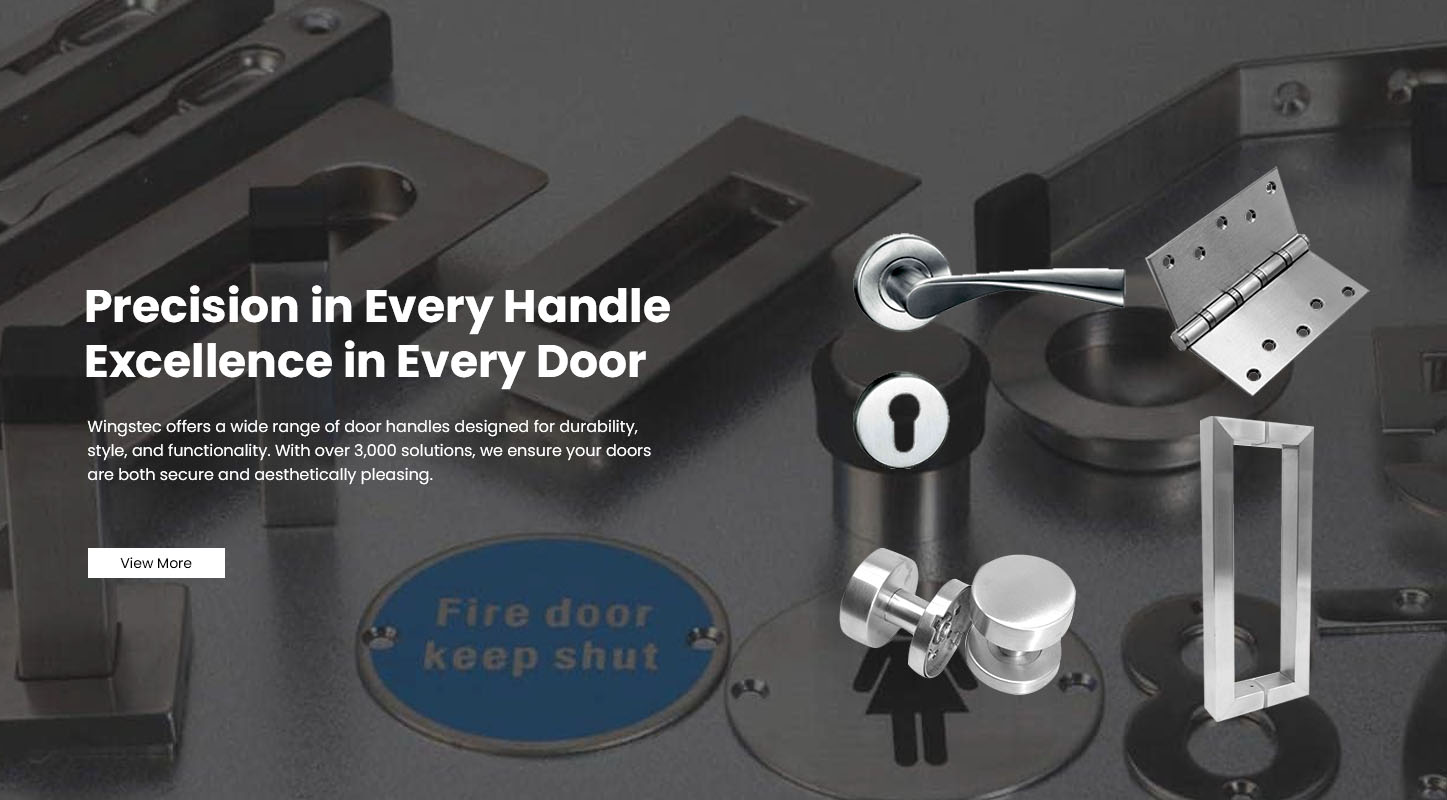
Removing a lever door handle is straightforward once you identify the fixing method. Most modern lever handles use either visible screws or a concealed fixing system with a hidden set screw and cover plate.
From a manufacturing perspective, lever handles are designed for secure installation while allowing controlled disassembly for maintenance or replacement.
Table of Contents
Identify the Handle Type First
Before removing, check which system you have:
Visible Screw Type
Screws are exposed on the plate
Easiest to remove
Concealed Screw Type (Most Common)
Hidden set screw under the lever
Decorative cover hides mounting screws
Clip-On Type
Uses internal spring clip
Requires release pin or tool
Step-by-Step Removal Process
Step 1: Locate the Set Screw or Fixing Point
Look underneath the lever for a small hole or screw.
If visible screws are present, you can skip to Step 4.
Step 2: Loosen the Set Screw
Use an Allen key to loosen the small screw.
Do not fully remove it unless necessary.
This releases the lever from the spindle.
Step 3: Remove the Lever Handle
Pull the lever straight off the door.
Avoid twisting to prevent damage to internal parts.
Step 4: Remove the Decorative Cover
If screws are hidden:
Insert a flat tool at the edge of the rosette
Gently pry off the cover
This exposes the mounting plate.
Step 5: Unscrew the Mounting Plate
Remove the screws holding the handle base to the door.
Both sides of the handle assembly will separate.
Step 6: Remove the Spindle and Latch (If Needed)
Slide out the spindle
Unscrew the latch from the door edge to remove completely
Quick Reference Table
| Handle Type | What to Do |
|---|---|
| Visible screws | Unscrew directly |
| Hidden set screw | Loosen → pull handle |
| Rosette cover | Pry off → access screws |
| Clip-on system | Press release → remove |
Common Mistakes to Avoid
Using the wrong size Allen key (can strip the screw)
Forcing the handle without loosening the set screw
Damaging the door surface when removing covers
Losing small components during disassembly
Manufacturer vs Trader: Why Removal Experience Differs
Ease of removal depends on design precision.
| Criteria | Manufacturer | Trader |
|---|---|---|
| Fixing System Design | Standardized and engineered | Generic |
| Component Fit | Precise tolerance | Inconsistent |
| Installation Logic | Clear and repeatable | Limited |
| Serviceability | High | Variable |
Factory-designed handles ensure smoother removal and reinstallation.
OEM / ODM Considerations for Lever Handles
Professional manufacturers optimize lever systems through:
Engineering Design
Concealed fixing structure development
Load and torque analysis
Compatibility with various door types
Testing Standards
Installation/removal cycle testing
Durability testing over 200,000 cycles
Alignment verification
Production Control
CNC machining for precision fit
Standardized assembly processes
Batch consistency checks
Manufacturing Process Overview
High-quality lever handles are produced through:
Metal forming using stainless steel, zinc alloy, or aluminum
Precision machining of internal components
Surface finishing for durability
Assembly with controlled alignment
Final inspection and functional testing
Conclusion
To remove a lever door handle, identify the fixing system, loosen the set screw if present, remove the handle, and then access and unscrew the mounting plate. The process is simple when done in the correct order.
From a manufacturing standpoint, well-engineered lever handles not only ensure secure installation but also allow easy maintenance and disassembly. For project sourcing, choosing a manufacturer with standardized designs and precise production ensures better installation efficiency and long-term usability.