


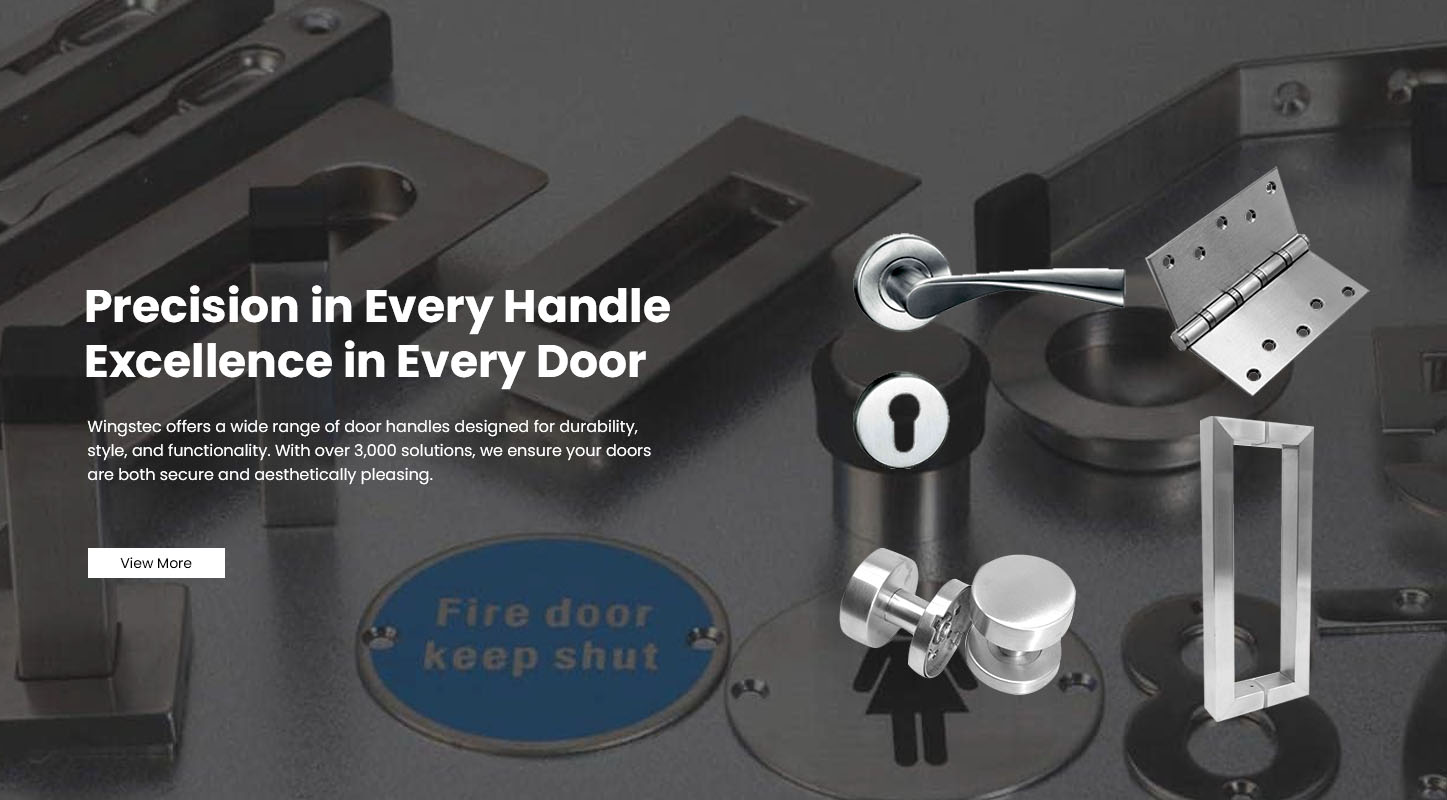
Commercial Door Handles are designed for durability, security, and high-frequency use, which makes their structure more complex than standard residential handles. Proper removal requires understanding the internal fixing system, Lock Body integration, and mounting method to avoid damaging the hardware or door.
As a professional architectural hardware manufacturer, Wingstec develops commercial-grade door handle systems with reinforced structures, concealed fixing options, and standardized installation methods for large-scale projects.
Table of Contents
- Common Types of Commercial Door Handle Systems
- Step-by-Step Removal Process
- Special Considerations for Commercial Systems
- Manufacturer vs Trader: Structural Differences
- OEM / ODM Process for Commercial Handle Systems
- Manufacturing Process Overview
- Quality Control Checkpoints
- Material Standards Used
- Bulk Supply Considerations
- Project Sourcing Checklist
- Export Market Compliance
- Conclusion
Common Types of Commercial Door Handle Systems
Lever Handle with Rose (Concealed Fixing)
Decorative cover hides mounting screws
Internal fixing plate connects to door
Lever Handle with Backplate
Visible plate with integrated lock or keyhole
Screws are often exposed or partially concealed
Mortise Lock Handle System
Integrated with a heavy-duty lock body inside the door
Includes spindle, latch, and locking mechanism
Understanding the type helps determine the correct removal approach.
Step-by-Step Removal Process
Step 1: Identify the Fixing Method
Check for:
Small set screw under the lever
Snap-on cover plate
Visible screws on backplate
This determines how the handle is secured.
Step 2: Loosen the Set Screw
Use an Allen key to loosen the hidden set screw located beneath the handle neck.
This releases the handle from the spindle.
Step 3: Remove the Lever Handle
Pull the handle straight off once the set screw is loosened.
Step 4: Remove the Cover Plate (if concealed)
Gently pry off the decorative rosette to expose the mounting screws underneath.
Step 5: Unscrew the Mounting Plate
Remove the screws holding the internal plate to the door.
This will detach both sides of the handle assembly.
Step 6: Extract the Spindle and Lock Components
Slide out the spindle and, if needed, remove the mortise lock by unscrewing the faceplate on the door edge.
Special Considerations for Commercial Systems
Fire-Rated Doors
Handles may be connected to fire-rated lock bodies. Removal should preserve door integrity and compliance.
Access Control Integration
Some commercial handles are linked to electronic systems. Disconnect power before removal.
Heavy-Duty Fastening
Commercial systems often use reinforced screws and thicker mounting plates, requiring proper tools.
Manufacturer vs Trader: Structural Differences
Ease of removal and reinstallation depends on product design quality.
| Criteria | Manufacturer | Trader |
|---|---|---|
| Fixing System Design | Engineered and standardized | Generic |
| Component Fit | Precision-controlled | Inconsistent |
| Installation Logic | Documented | Limited support |
| Long-Term Serviceability | Reliable | Variable |
Factory-designed systems ensure both secure installation and efficient maintenance.
OEM / ODM Process for Commercial Handle Systems
Professional manufacturers develop commercial handles through:
Engineering Design
Load-bearing analysis for high-traffic use
Reinforced spindle and latch systems
Compatibility with different door standards
Prototype Testing
Cycle testing exceeding 200,000 operations
Pull force and torque resistance testing
Installation/removal repeatability testing
Custom Development
Backplate and lever design customization
Surface finish and branding options
Integration with locking or access systems
Mass Production
CNC machining for precise components
Controlled assembly processes
Batch-level consistency verification
This ensures durability and easy maintenance across projects.
Manufacturing Process Overview
Commercial door handles are produced through:
Material forming using stainless steel or zinc alloy
Precision machining of internal components
Surface finishing for wear and corrosion resistance
Assembly of mechanical systems
Final functional and durability testing
Wingstec integrates engineering and production to deliver consistent commercial hardware solutions.
Quality Control Checkpoints
To ensure reliable performance and serviceability:
Component Inspection
Spindle strength and dimensions
Spring elasticity and durability
Assembly Verification
Alignment of handle and lock body
Secure fixing system performance
Final Testing
Cycle durability testing
Load and torque resistance
Surface finish inspection
These checkpoints ensure consistent quality across bulk supply.
Material Standards Used
Material selection is critical for commercial applications:
304 Stainless Steel: high corrosion resistance and strength
Zinc Alloy: structural flexibility and design precision
Hardened Steel Components: durability under repeated use
High-grade materials prevent deformation and ensure long service life.
Bulk Supply Considerations
For large-scale commercial projects:
Consistency in fixing systems across batches
Standardized installation procedures
Stable production capacity
Reliable delivery timelines
Manufacturers with integrated production lines provide better control and support.
Project Sourcing Checklist
When selecting commercial door handles:
Confirm handle type and fixing method
Verify compatibility with lock systems
Check durability testing standards
Evaluate supplier engineering capability
Request installation guides and samples
Export Market Compliance
Export-oriented manufacturers align with:
Mechanical durability requirements
Fire safety and corrosion resistance standards
Dimensional compatibility for international markets
Conclusion
Removing a commercial door handle involves identifying the fixing system, loosening concealed components, and carefully disassembling the mounting structure. While the process is straightforward, the ease of removal depends on product design and manufacturing precision.
For project buyers and bulk procurement, choosing a manufacturer with strong engineering capability and standardized systems ensures efficient installation, maintenance, and long-term reliability.